


Ki.Sui Journal / Hair Care
Frizzy Hair and Humidity: Why It Happens and What to Do, from City to Coast
You leave home with a flawless blow-dry, only to find your hair puffy and frizzy ten minutes later. It is not simply a problem with your hairdryer: there is chemistry behind it. Discover why humid air undoes your style, why coastal days can make matters worse and how to help your hair stay smooth.
In short. Hair becomes frizzy in humid conditions because the keratin in the hair fibre absorbs moisture from the air. The fibre swells, and the bonds that help hold a hairstyle in place are disrupted. The more porous the hair — for example, after bleaching — the more readily it takes up water. Three habits make a difference: condition after every wash, apply a leave-in before drying and dry your hair thoroughly.
Why Does Humidity Make Hair Frizzy?
Hair consists largely of keratin, a protein that attracts water. It absorbs moisture not only in the shower, but from the surrounding air. Laboratory research found that the amount of water held by hair increases linearly as relative humidity rises from 40 to 85% (Gao, 2007). As hair absorbs water, it swells (Gavazzoni Dias, 2015).
Then there is the blow-dry itself. As you style your hair, water alters the hydrogen bonds in keratin and the hair dries into a new shape (Gavazzoni Dias, 2015). These bonds are relatively weak: in humid air, hair absorbs water again and gradually returns towards its natural shape. On curly hair that may mean extra volume and frizz; on straight hair, puffy ends and a style that falls flat.
Frizz is also something you can feel. A study by L’Oréal researchers found that changes in humidity affect friction between fibres, influencing how frizzy curly hair feels to the touch (Skedung et al., 2021). For a broader explanation, see our guide to the causes of frizzy hair and remedies that really work.
Why Bleached Hair Is More Affected
Bleaching increases the overall pore volume inside hair (Habe et al., 2025), creating more spaces through which water can enter and leave. Oxidative treatment also disrupts some of keratin’s stronger disulphide bonds and changes the contribution of weaker hydrogen bonds. Humidity has a marked effect on those hydrogen bonds (Breakspear et al., 2019). That is why lightened hair may start to frizz even if it never did before.
City, Sea or Swimming Pool: Humidity Is Not the Same Everywhere
Frizz is often seen as a summer problem, but humid autumn and winter days can be just as challenging in many cities. During summer, heat and sweat come into play; by the sea, add sunshine, wind, salt and repeated dips in the water.
| Where and when | What happens | What matters most |
|---|---|---|
| Humid city, autumn and winter | Damp air and mist can undo your style within hours | Leave-in care and drying thoroughly |
| City in summer | Heat and perspiration dampen the roots | Gentle shampoo, even with frequent washing |
| Seaside | Sun, salt, wind and repeated swims | Protect beforehand, rinse afterwards, use a mask in the evening |
| Swimming pool | Chlorine and friction from the water | Swimming cap, rinsing and conditioning |

Sea, Sun and Swimming Pools: What Does the Research Say?
Sunlight. Solar exposure can affect hair colour, strength, shine, proteins and surface roughness (Dario et al., 2015). A rougher surface can contribute to frizz. However, unlike skincare, hair products do not have a standardised, regulated way of measuring sun protection (Dario et al., 2015). A hat remains a sensible choice during the hottest hours.
Chlorine. In a study of 67 elite Japanese swimmers, 61% showed hair lightening, compared with none in the control group. Microscopy revealed severe cuticle loss in the affected hair. The authors linked this to friction from swimming and to hypochlorous acid in pool water penetrating the hair cortex (Nanko et al., 2000).
Salt. We have not found robust studies specifically measuring the effect of seawater on frizz. We do know that repeated wetting and drying causes hair to swell and contract, a process known as hygral fatigue, which may contribute to damage (Gavazzoni Dias, 2015).
Your Routine for Humid Days and Summer
- Cleanse without stripping. You may wash your hair more often in summer, so choose a gentle shampoo. Soft Cleaning Shampoo is a sulphate-free anti-frizz shampoo suitable for daily use on dehydrated or damaged hair.
- Always condition. Conditioners and masks help reduce friction and frizz while restoring some water repellency at the surface (Gavazzoni Dias, 2015). Smooth Touch Mask, a nourishing anti-frizz mask for dry or frizzy hair, is left on for 5 minutes, or 15 minutes once a week. Read more about how often to use a hair mask.
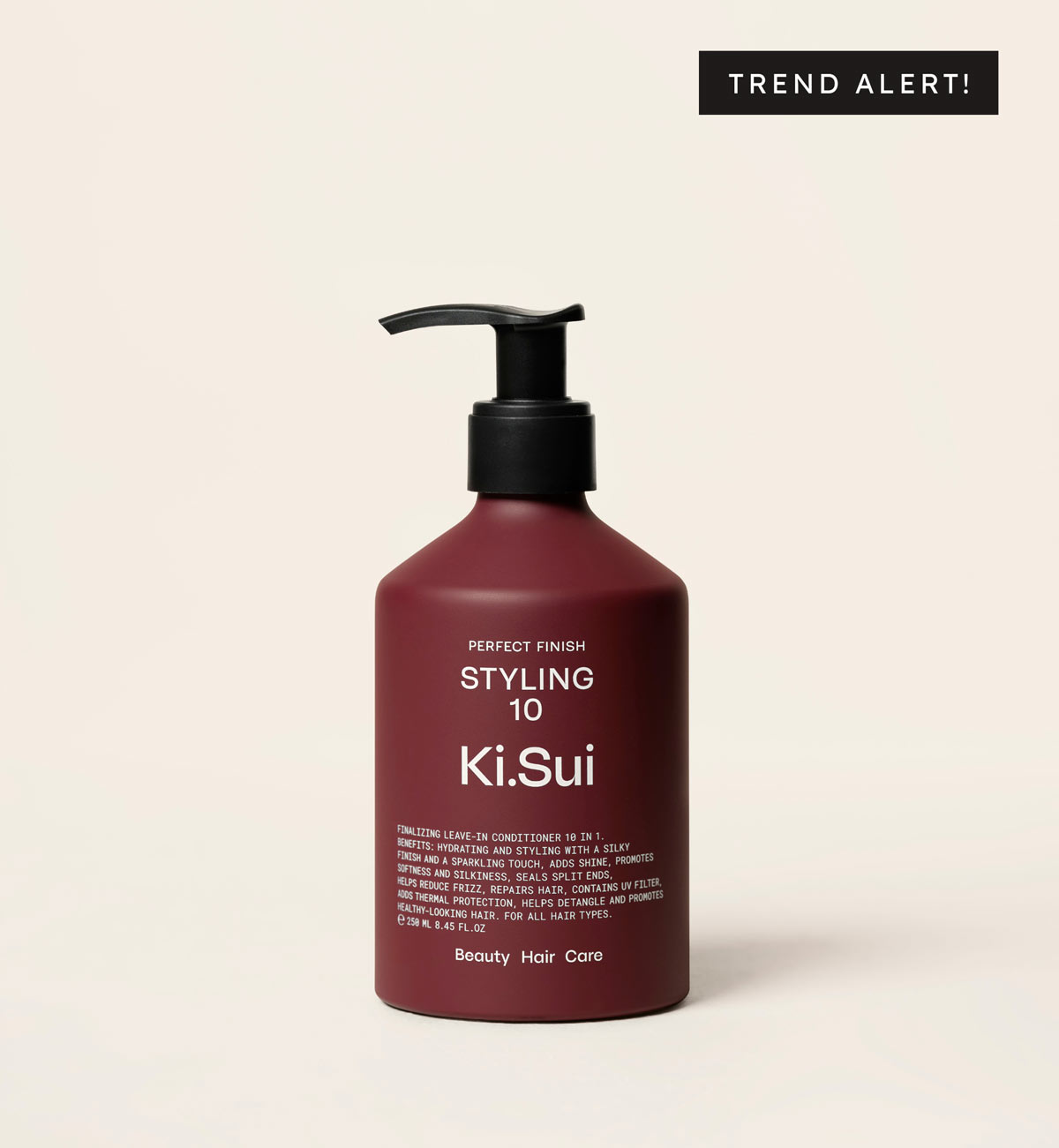
- Seal before you dry. Apply a leave-in to towel-dried hair. Styling 10 helps seal the cuticle, control frizz and offers heat and sun protection. A few drops of oil on dry ends can also help: oil remaining on the outer layers of hair reduces water absorption (Gavazzoni Dias, 2015).
- Dry thoroughly. A style created on slightly damp hair will not last. Keep the hairdryer moving and finish with cool air. Never use straighteners on wet hair or without heat protection: the water inside the fibre can boil and form bubbles under intense heat (Gavazzoni Dias, 2015). See what happens when you straighten your hair every day.
- Then, hands off. The less you touch your hair, the less frizz you encourage. On very humid days, a loose plait or low bun can help. Define curls while wet and let them dry without constant handling.
At the Beach: Before and After Swimming
- Before: apply leave-in to the lengths and tie hair back to reduce tangling in the wind.
- After every swim: rinse with fresh water and gently press with a towel rather than rubbing.
- In the evening: use a gentle shampoo, a mask and leave-in care again.
- At the pool: a swimming cap is one of the simplest barriers against chlorine exposure.
Explore our complete selection of products for frizzy hair. If frizz persists despite a good routine, the hair may be particularly porous. An in-salon professional can assess its condition and recommend an appropriate smoothing treatment.
Not sure which routine suits you best? Answer a few questions about your hair and scalp and receive personalised Ki.Sui recommendations.
Frequently Asked Questions
Why does hair swell in humid weather?
Keratin absorbs moisture from the air, causing the fibre to swell. Water also disrupts the hydrogen bonds that hold a style in place. More porous hair, such as bleached hair, tends to be more affected.
Do anti-humidity sprays work?
In laboratory tests, some conditioning polymers used in shampoos improved resistance to humidity (Gao, 2007). No product completely blocks moisture, however. A combination of conditioning, leave-in care and thorough drying is more reliable.
What should I do with frizzy hair after swimming in the sea?
Rinse with fresh water after every swim and gently blot it dry. In the evening, wash with a gentle shampoo, apply a mask and use a leave-in before drying. Never straighten hair while it is still damp.
Can swimming-pool chlorine damage hair?
Frequent exposure may contribute to damage. In a study of elite swimmers, 61% had lightened hair showing severe cuticle wear. A swimming cap, rinsing after swimming and conditioning can help.
Does humidity affect curly or straight hair more?
Both absorb water from the air. On curly hair, humidity may also change how frizzy the hair feels; on straight hair, styles may lose their shape and the ends may become puffy.
Sources
- Gao T. Evaluation of hair humidity resistance/moisturization from hair elasticity. Journal of Cosmetic Science, 2007;58(4):393-404. PubMed 17728940
- Gavazzoni Dias M.F.R. Hair cosmetics: an overview. International Journal of Trichology, 2015;7(1):2-15. doi:10.4103/0974-7753.153450
- Skedung L. et al. A Curly Q: Is Frizz a Matter of Friction? Perception, 2021;50(8):728-732. doi:10.1177/03010066211024442
- Habe T. et al. Thermoporometry measurements of human hair via differential scanning calorimetry. International Journal of Cosmetic Science, 2025;47(2):234-239. doi:10.1111/ics.13025
- Breakspear S., Noecker B., Popescu C. Relevance and Evaluation of Hydrogen and Disulfide Bond Contribution to the Mechanics of Hard α-Keratin Fibers. The Journal of Physical Chemistry B, 2019;123(21):4505-4511. doi:10.1021/acs.jpcb.9b01690
- Dario M.F., Baby A.R., Velasco M.V.R. Effects of solar radiation on hair and photoprotection. Journal of Photochemistry and Photobiology B, 2015;153:240-246. doi:10.1016/j.jphotobiol.2015.09.025
- Nanko H. et al. Hair-discoloration of Japanese elite swimmers. The Journal of Dermatology, 2000;27(10):625-634. doi:10.1111/j.1346-8138.2000.tb02243.x