


Ki.Sui Journal / Coloured Hair
How to Refresh Hair Colour Between Appointments
Three weeks after the salon, your blonde is turning yellow and your brunette looks flat. It is not always a bad colour job: colour wears away with water, light and heat. Here is why it happens, what to do for your shade and how to refresh hair colour so it lasts longer.
In short. Colour fades mainly through washing, which dissolves the dye, and through sun and heat. To refresh it, wash less often, limit heat and once a week use a colour-depositing mask that suits your shade: violet or black for blonde that turns yellow, a mask for brown tones when brunette looks dull.
01 / Why colour fades
Why Hair Colour Fades Between Appointments
Most of the colour you lose goes down the drain. Dye is lost mainly because it dissolves in water while you shampoo (Zhou et al., 2009). Ammonia-free colours, known as demi-permanent, usually last 10–15 washes, and sometimes fewer (Gavazzoni Dias, 2015).
Washing is the main culprit, but not the only one. Sun, heat and even the swimming pool play their part. And sometimes what looks like fading is not fading at all.
02 / The other culprits
Sun, Heat, Pools and Regrowth
The Sun
Light changes the colour of all hair, especially light hair, and the main culprit is UVA radiation (Nogueira and Joekes, 2004). In the lab, dyed tresses lost far more colour when sun and washing were combined. White or bleached hair that had then been dyed lost much more than dyed brown hair (Locke and Jachowicz, 2005). In other words: in summer, and on grey or bleached hair, colour does not last as long.
Heat from Straighteners and Hairdryers
Intense heat breaks down tryptophan, an amino acid in the hair. The result is white hair that turns yellow and bleached blonde that darkens (Gavazzoni Dias, 2015).
The Swimming Pool
In light hair that has already been treated, copper from the water can build up and, in poorly maintained pools, turn it green (Lomelí-Legaspi et al., 2024).
Regrowth
If you can see white hair at the roots after two weeks, your colour is not washing out: that is new hair growing (Gavazzoni Dias, 2015). What you need then is a root touch-up at the salon, not a mask.
03 / Know your shade
Why Blonde Turns Yellow (and Brunette Turns Brassy)
Natural hair colour comes from two pigments: eumelanin, from black to brown, and pheomelanin, from reddish-brown to yellow. Brown and blonde hair also contain a small amount of pheomelanin (Ito and Wakamatsu, 2011). Lightening means oxidising and breaking down these natural pigments (Fernandes et al., 2023).
We see it in the salon every day. As the brown goes, a warm base comes through: orange first, then yellow. That is why highlights are almost always followed by a toner, and why the yellow comes back once the toner wears off. On brown hair, the coppery tones you never asked for are often that same warm base, resurfacing as the colour fades.
04 / Colour theory
How Does a Purple Mask Work?
It is colour theory. On the colour wheel, violet sits opposite yellow and blue sits opposite orange. Lay two opposite colours over each other and they cancel each other out. A mask with violet pigments leaves a veil of colour that tones down the yellow.
It does not lighten your hair and it does not repair bleach damage: it corrects the tone. We have not found independent studies measuring its effect. The basis is colour theory and salon experience.
05 / Shade by shade
How to Refresh Hair Colour, Shade by Shade
| Your colour | Likely cause | What to do |
|---|---|---|
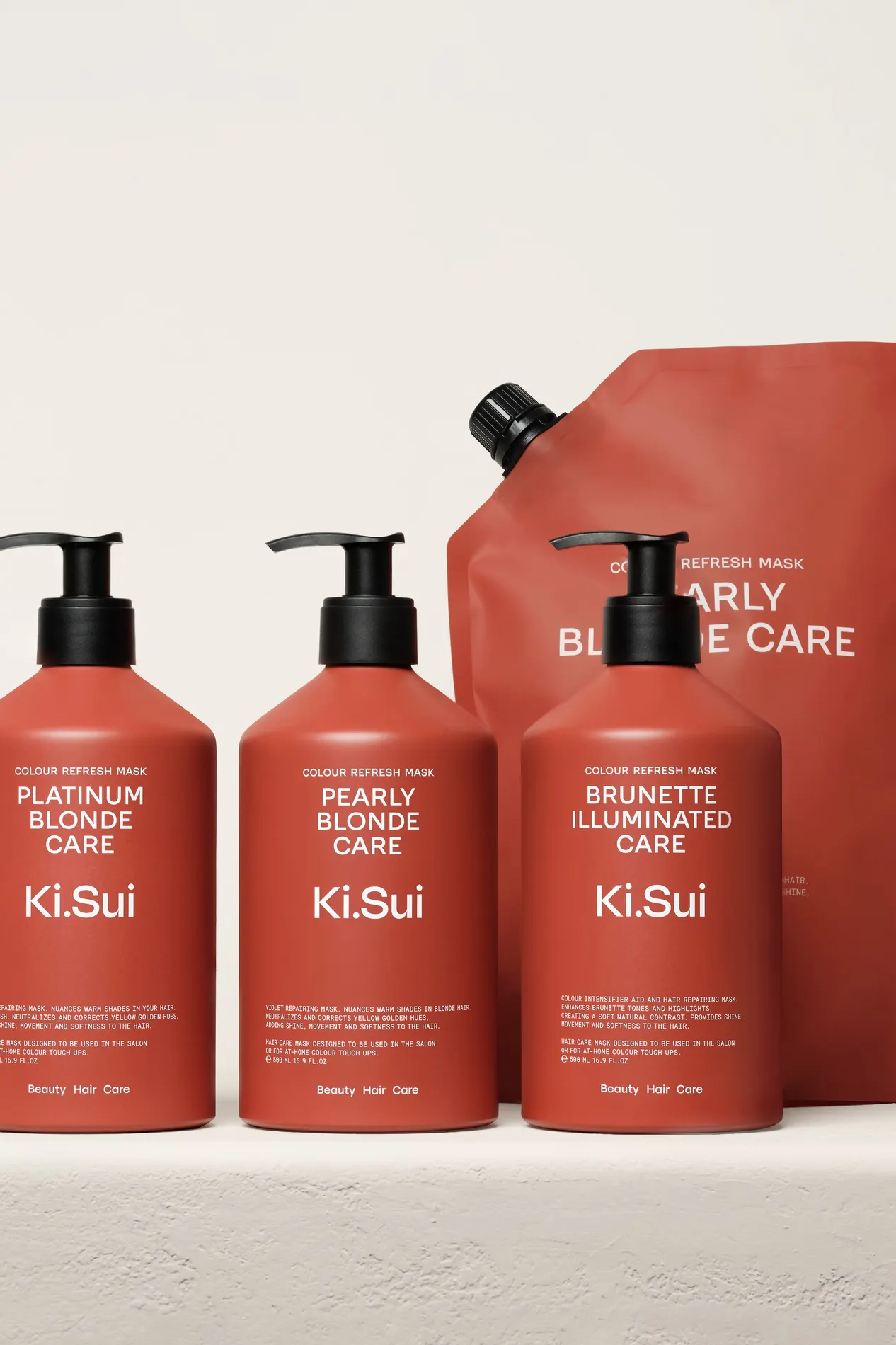
| Blonde or highlights turning yellow | The toner has worn off; sun | Correct the tone once a week. Pearly Blonde Care is a violet mask that neutralises yellow tones, for a pearly beige blonde. |
| Platinum, cool blondes, grey hair turning yellow | The toner has worn off; heat | Correct the tone and cut down on heat. Platinum Blonde Care is a black anti-yellow mask for cool tones, platinum and naturally grey hair. |
| Dull brunette, highlights gone | Washing and sun stripping the colour | Revive the tone between colour appointments. Brunette Illuminated Care is a mask for brunettes that enhances and intensifies brown tones. |
| Brown hair with orange or coppery tones you do not want | The warm base coming through | A toner with blue pigments, applied by your colourist. No Ki.Sui mask is designed for this. |
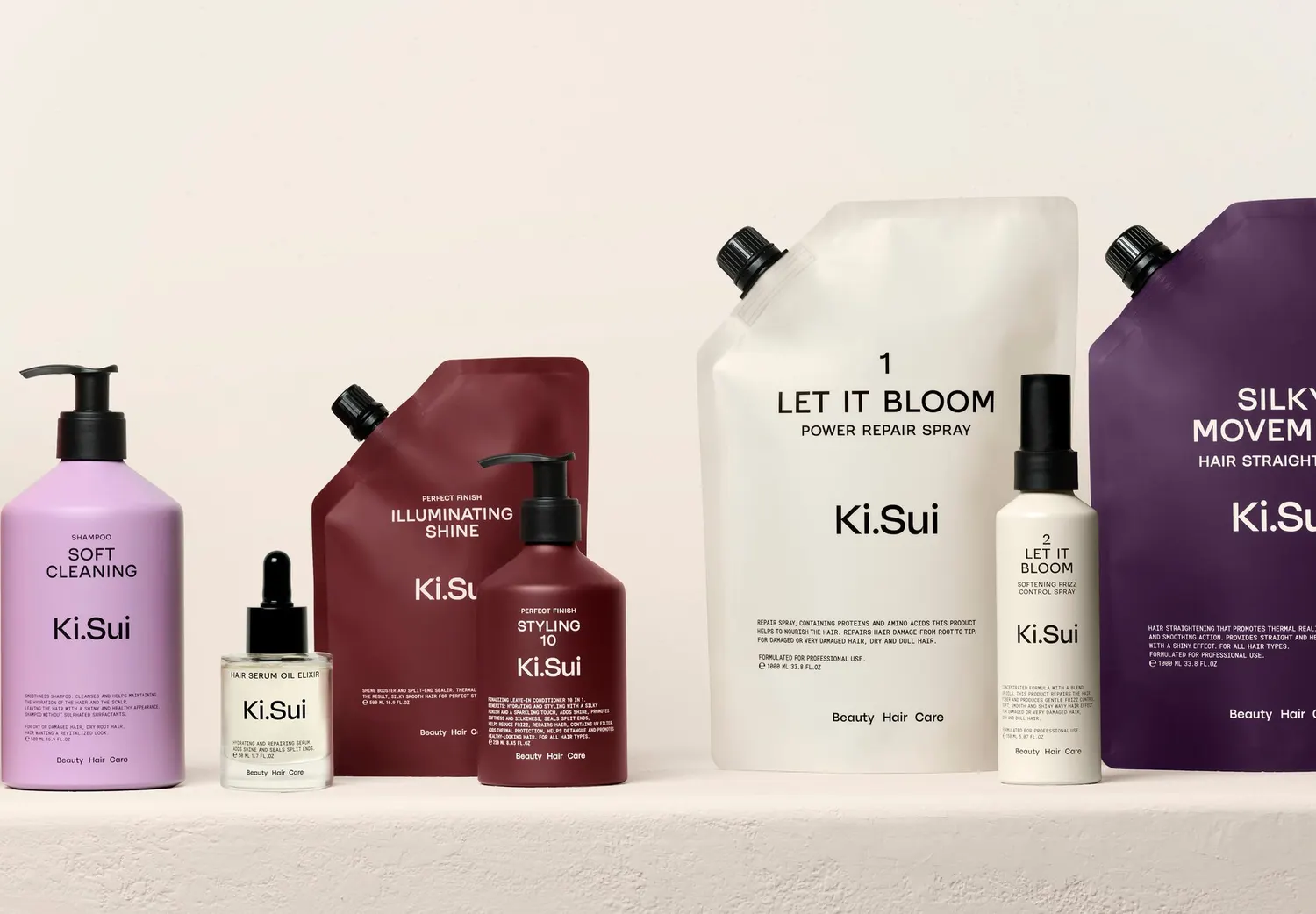
All three masks are used the same way, as their product pages explain: once a week, after shampooing, leave on for 15 minutes, then rinse. They are semi-permanent colour masks, designed to maintain your colour between salon visits, which is why you keep using them. You will find them in the Colour Refresh Mask collection and among our products for coloured hair.
06 / Make it last
How to Make Your Colour Last Longer
Four habits that help your colour hold between salon visits.
- Wash less often.
Every shampoo takes a little colour with it (Zhou et al., 2009). There is no right frequency for everyone, but if your scalp allows it, add one more day between washes.
- Choose a gentle shampoo, without expecting miracles.
Many colourists recommend sulphate-free formulas, but there are no published analyses of how well they work or whether they are any gentler (Gavazzoni Dias, 2015). How often you wash matters more. Lukewarm water is another popular tip, but we have not found studies that measure it.
- Protect it from the sun.
Sun and washing together are the combination that strips the most colour (Locke and Jachowicz, 2005). In summer, wear a hat.
- Use less heat.
Turn down the temperature on your straighteners and hairdryer, especially on grey and bleached hair.
Colouring and bleaching also make hair more porous and prone to frizz. We cover this in Frizzy Hair: Causes and Remedies That Really Work.
The right mask for you
Not Sure Which Mask Suits Your Colour?
Answer a few questions about your hair and scalp to discover a personalised Ki.Sui routine.
Take the Free Hair Diagnosis →07 / FAQs
Frequently Asked Questions About Faded Hair Colour
How often should I use an anti-yellow mask?
For Ki.Sui masks, the guidance is once a week, after shampooing, left on for 15 minutes. If your blonde is very light or has been bleached several times, try it first on a hidden strand. Bleached hair absorbs dyes more quickly.
Does a purple mask work on brown hair?
Not much, as a rule. Violet neutralises yellow, which is rarely the problem on brown hair: brunette that fades tends to go orange or coppery instead. To revive it, you need a mask designed for brown tones; to remove orange, a blue toner applied by your colourist.
Why does my hair colour fade so quickly?
Usually because frequent washing, sun and heat add up. Demi-permanent colours generally last 10–15 washes. If your roots are a different colour, that is regrowth, not colour washing out.
Why does white hair turn yellow?
One documented cause is heat from straighteners and hairdryers, which breaks down tryptophan in the hair and turns white hair yellow. The evidence on sun is less clear: in one study, white hair exposed to UV became less yellow, not more (Nogueira et al., 2007).
Research & Further Reading
- Zhou et al. (2009). Protection of oxidative hair color fading from shampoo washing by hydrophobically modified cationic polymers. Journal of Cosmetic Science, 60(2), 217–238.
- Locke and Jachowicz (2005). Fading of artificial hair color and its prevention by photofilters. Journal of Cosmetic Science, 56(6), 407–425.
- Nogueira and Joekes (2004). Hair color changes and protein damage caused by ultraviolet radiation. Journal of Photochemistry and Photobiology B, 74(2–3), 109–117.
- Nogueira et al. (2007). Photo yellowing of human hair. Journal of Photochemistry and Photobiology B, 88(2–3), 119–125.
- Gavazzoni Dias (2015). Hair cosmetics: an overview. International Journal of Trichology, 7(1), 2–15.
- Ito and Wakamatsu (2011). Diversity of human hair pigmentation as studied by chemical analysis of eumelanin and pheomelanin. Journal of the European Academy of Dermatology and Venereology, 25(12), 1369–1380.
- Fernandes, Cavaco-Paulo and Matamá (2023). A Comprehensive Review of Mammalian Pigmentation: Paving the Way for Innovative Hair Colour-Changing Cosmetics. Biology, 12(2), 290.
- Lomelí-Legaspi et al. (2024). The Greening of Hair: A Unique Case of Chlorotrichosis and Its Management. Skin Appendage Disorders, 10(6), 528–531.

